In this article we will go over and highlight some natural skin care remedies done with plants and herbs. Some of the results from these plants and herbs can yield great results, adding moisture to the skin, helping fine lines and wrinkles, balancing out skin tone, and aiding with acne. Some of these plants and herbs have antibacterial properties that help repair skin that has been damaged by the sun and other external elements.
Calendula can be extracted into an oil that also contains anti-fungal and antibacterial properties. Calendula can help clear up bruises, moreover it can help heal cuts, scars, and sores.
Turmeric is an incredible anti-inflammatory root. You can use tumeric to treat swore and swollen muscles, the root can aid in the healing properties with personal injuries.
When tumeric is eaten it will detoxify the blood system, which improves your overall health.
Nettles
Nettles can be useful useful for clearing up eczema and healing skin wounds. Another way to take nettles is to make a tea or tonic.
Comfrey’s active medicinal components can be found in the flowers and leaves. Comfrey is an anti-inflammatory. Comfrey is also a great moisturizer, and it can be used for burns, bruises, and eczema.
Alfalfa
Alfalfa has medicinal properties found in the leaves and seeds. It also contains carotene, which is high in vitamin A, this can help with hair and skin. Also, alfalfa contains amino acids and other trace minerals. These beneficial nutrients make alfalfa a great natural skin care remedy.
We’ve all had those bad hair days! When no product seems to work, and your hair has a mind of its own. Hair is often seen as a reflection of our identity and health, yet many people don’t truly understand what their hair needs to thrive. Effective hair care starts with knowing your hair type, scalp condition, and the ingredients that actually make a difference. But what if the secret to great hair isn’t in how much you use, but how well you understand your hair’s unique needs?
𝐇𝐚𝐢𝐫 𝐏𝐨𝐫𝐨𝐬𝐢𝐭𝐲
Hair porosity refers to how quickly your hair will take in and retain moisture. It is predicated on the well-being of the outer sheath of your hair, which is the cuticle, which opens and shuts to take in or out water. There are three levels of hair porosity:
𝙇𝙤𝙬 𝙋𝙤𝙧𝙤𝙨𝙞𝙩𝙮
Cuticles are tightly closed.
Hair tends to resist moisture, making it harder for water or products to penetrate.
It may take a long time for hair to get wet and also to dry.
Signs: Product buildup, water beads on hair, hair feels dry but is hard to moisturize.
Tips: Use lightweight, water-based products. Apply heat (like warm water or a steamer) when deep conditioning to help open the cuticle.
𝙈𝙚𝙙𝙞𝙪𝙢 𝙋𝙤𝙧𝙤𝙨𝙞𝙩𝙮 = 𝙉𝙤𝙧𝙢𝙖𝙡 𝙃𝙖𝙞𝙧
Cuticles are slightly open, allowing moisture in and out with ease.
Hair is generally healthy, manageable, and holds styles well.
Signs: Accepts moisture easily, dries at a normal rate, doesn’t tangle too much.
Tips: Stick to a balanced routine-moisturize regularly, and avoid excessive heat or chemicals to maintain porosity.
𝙃𝙞𝙜𝙝 𝙋𝙤𝙧𝙤𝙨𝙞𝙩𝙮
Cuticles are raised or damaged, often due to heat, color treatments, or genetics.
Hair absorbs moisture quickly but loses it just as fast.
Signs: Frizz, tangling, dryness, and quick drying time.
Tips: Use heavier products like creams, oils, and protein treatments to seal in moisture and strengthen the hair. Avoid heat and harsh chemicals when possible.
𝐓𝐡𝐞 𝐔𝐥𝐭𝐢𝐦𝐚𝐭𝐞 𝐓𝐞𝐬𝐭 :
It’s a simple way to figure out how well your hair absorbs and holds moisture. Here’s the most common method:
Important tip: Make sure your hair is freshly washed before testing! Oils and products can mess with the result.
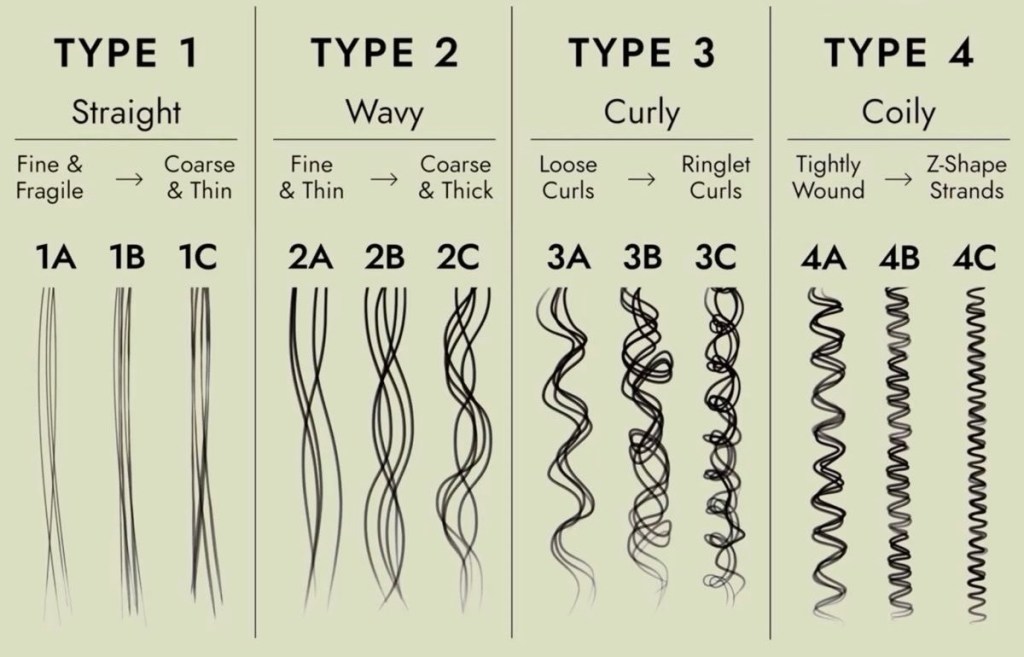
𝐇𝐚𝐢𝐫 𝐓𝐲𝐩𝐞𝐬
Hair type refers to the natural shape or pattern of your hair strands, and it plays a big role in how your hair behaves, what products work best, and how to care for it. Hair types are usually categorized into four main groups (Type 1 to Type 4), with subcategories (A, B, C) to describe the texture more specifically.
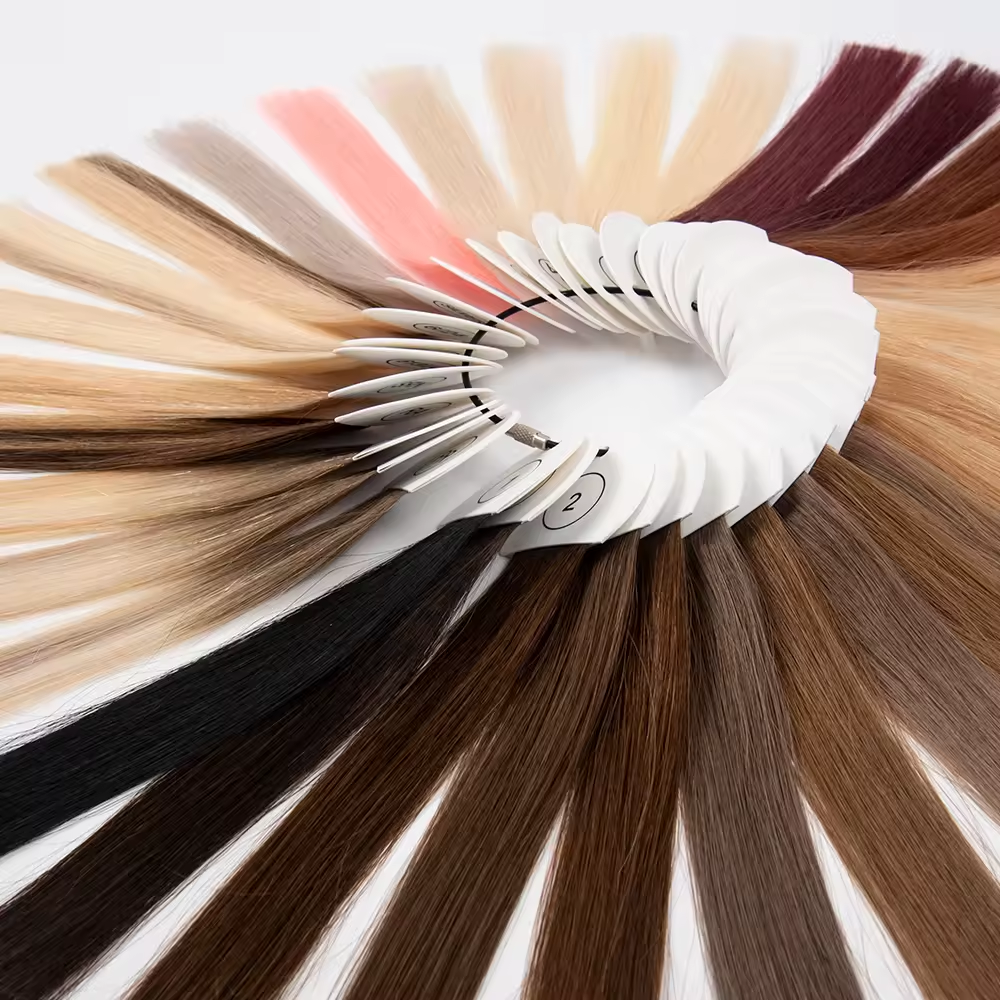
Hair color analysis is the method of determining the colors and tones that most suit your natural coloring- such as your skin tone, eye color, and natural hair color. It assists individuals in selecting hair colors (and sometimes makeup or attire) that improve their overall appearance. This is sometimes associated with the idea of seasonal color analysis, which categorizes individuals as spring, summer, autumn, or winter.
Determine Your Skin Tone:
Cool undertones: Pink, red, or bluish hues. Veins may appear blue. Skin burns easily.
Warm undertones: Golden, peachy, or yellow hues. Veins may look green. Skin tans easily.
Neutral undertones: A mix of warm and cool.
2. Match Hair Color to Undertones:
Cool undertones: Look best with ashy blondes, cool browns, jet black, or cool reds like burgundy.
Warm undertones: Look good with golden blondes, honey browns, copper, and warm reds.
Neutral undertones: Can wear a wide range of colors, both warm and cool.
3. Consider Eye Color:
Cool-toned eyes: Icy blue, grey, deep brown.
Warm-toned eyes: Amber, hazel with gold or green, light brown.
4. Seasonal Analysis:
Spring: Light eyes, fair warm skin. Best with warm blondes, strawberry blondes, and light golden browns.
Summer: Cool undertones, soft features. Best with ash blondes, cool browns, and rose golds.
Autumn: Warm undertones, deep eye color. Best with rich auburn, copper, and chestnut browns.
Winter: Cool undertones, high contrast (pale skin/dark hair). Best with deep blacks, cool browns, and icy blondes.
Why is a Hair Color Analysis Important?
It prevents the use of colors that don’t go well with your skin tone (which would leave your complexion dull or pale) and instead enhances your own natural glow. It’s particularly helpful before significant color transitions or lightening/darkening (or vice versa).
We all love our self care/ love days after a long week of stress, but sometimes we don’t know where to start. Well let me tell you that getting a facial is the best thing to try for you and your skin. A facial is a skin treatment that improves your skin health and overall well being. Facials are also known for relaxation which everyone needs, due to the gentle massages they incorporate to target facial muscles and help to release tension. It also increases blood flow to the skin which brings nutrients and oxygen to reduce stress and promote a healthy, radiant complexion. Stress damages our skin by acne outbreaks, as well as dehydration.
What’s include in a Facial
There are 5 steps that a facial includes in your appointment
Cleansing: Helps remove dirt and makeup away from your skin before starting the process of your treatment
Exfoliation: Exfoliants are used with scrubs or gloves to exfoliate your skin with circle motion. To help remove dead skin cells and unclogging pores.
Extract: Extraction is for blackheads, white heads, and other dirtiness of pores. In my opinion this is my least favorite part of a facial but it is worth the pain.
Massage: Warm body wraps, rubbing tools in your head, massage in your neck, arms, and back help reduce stress and relax tense facial muscles.
Hydrate: At the end of the treatment they finish it up with serums and moisturizers to deeply hydrate your skin. As well sunscreen to prevent any damage after exfoliating or hyperpigmentation.
Types of facials
Hydrafacial- One of the most popular treatments there is in esthetician. It’s very helpful for those who suffer from dry skin, this treatment is a deep cleanse that hydrates your skin and gives the glow right away. It reduces fine lines, wrinkles, and clears clogged prove, lastly it improves skin tones.
Chemical Peel- A way to exfoliate the skin and promotes a new skin growth which by the ways this helps remove dead skin cells, plus it leads you for a smooth and more even tone skin
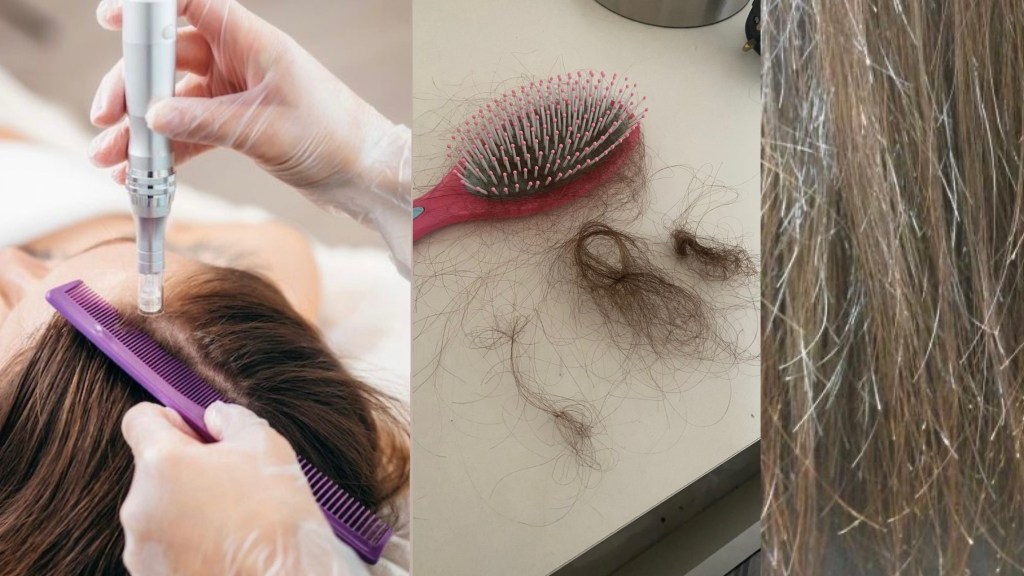
Microneedling- A procedure that is more a medical service that includes a pen with multiple mini needles which helps with the appearance of line, wrinkles, and acne scars. This facial boosts your collagen system which helps your skin look smooth.
Dermaplaning- Removes the outermost layer of dead skin which allows better product penetration especially when applying active ingredients and moisturizers
Addressing Specific Skin Concerns:
Estheticians recommend getting a facial every 4-6 weeks for better results. This may depend on your skin concerns, type, and goals. I personally usually get it once done every month, so it helps me stay within my budget. Oily, Acne-prone, and dry skin is recommended to receive a facial every 4 weeks to manage any type of concerns and stay consistent with the progress. It’s totally normal that after receiving your facial treatment, your skin will be red and become inflamed due to removing all the toxins & bacteria from your skin. It is key to prevent sun exposure after your treatment. It is a must to have a hat to block the sun and depending on the treatment received to reapply sunscreen every 2 hours.
Results
As you can see I’m a girl that suffers from acne, I completely understand how that might feel. From my experience, it was really hard at first to find a solution, but after having that door open where it lead me to a new beginning for my skin. I discovered the treatments of facials and took it as a beautiful opportunity to instead in my skincare. Hydrafacial is one of my favorite treatment at the moment which completely improved and restored my skin hydration while helping me control and prevents future breakouts. So don’t put off getting a facial, Trust me you and your skin will thank me later !:)
Skincare can be confusing, especially since social media influencers have 15-step routines and all recommend different products. Truth is a simple 3-5 step routine can give the same results. Sometimes even better since you aren’t overwhelming your skin with various products. In this blog post, I’ll cover the essential steps, my personal routine, and affordable products. As a bonus, I will also talk about makeup that has skincare in it.
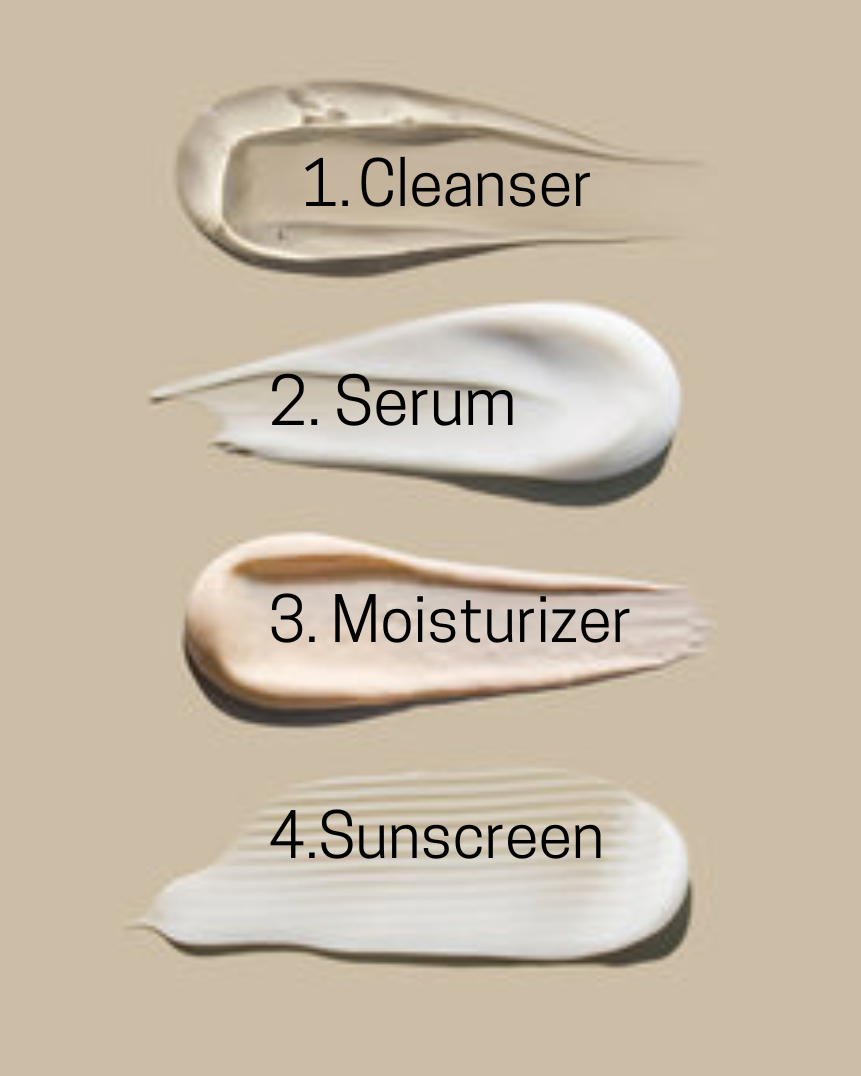
Essential Skincare Steps
Cleanser: This washes away all the dirt and makeup, giving you a clean base for the next products.
Serum: A treatment for specific things like acne, wrinkles, or brightness of the skin.
Moisturizer: Locks in the hydration for the day so that your skin isn’t dry or irritated.
Sunscreen: Protects the skin from sun damage and prolongs aging. This step is only used in the morning!
My Personal Routine
This is the routine I use to get clear and glowy skin! Each of these products plays a vital role in my skincare to maintain healthy skin.
Cleanser: La Roche-Posay Purifying Toleriane Face Wash for Oily Skin (Target $17.99). Use both AM and PM Link For Facewash
Sunscreen: Round Lab Birch Juice Moisturizing UV Lock Korean Sunscreen. (Target $24.99) Use AM Link for Round Lab UV
Makeup and Skincare in 1
For people who love to wear makeup and still want to take care of their skin, here are some amazing products that range from low to high end! Not only do these products make you look good, but also keep your skin hydrated and protected from the sun. (* next to products, are the items I use)
Primer: Tatcha The Liquid Silk Canvas* ($54) / Elf Power Grip Primer + Niacinamide ($10) Foundation: IT Cosmetics CC+ Nude Glow Foundation with SPF 40* ($47) / L’Oréal True Match Nude Hyaluronic Tinted Serum ($16) Blush: Rhode Pocket Blush Infused with Peptides* ($24) / Elf Halo Glow Blush Beauty Wand ($9) Setting Spray: Charlotte Tilbury Airbrush Flawless Setting Spray* ($38) / Elf Power Grip Dewy Setting Spray ($10)
Budget Friendly Skincare
Here are some budget-friendly skincare products that can give the same results as high-end products without breaking the bank.
Cleanser: Cetaphil Daily Facial Cleanser for Sensitive Skin ($11.99) Serum: The Ordinary Hyaluronic Acid 2% + B5 Hydrating Serum with Ceramides ($9.90) Moisturizer: CeraVe PM Facial Moisturizing Lotion ($13.29) Sunscreen: CeraVe AM Face Moisturizer with SPF 30 ($13.29)
Build Your Own Routine
If you want to build your own skincare routine, the first step is finding out what skin type you have and what kind of products you need. Dry skin, oily skin, normal skin, or sensitive skin. If you have Dry skin, lean towards more moisturizing and thick products. Look for ingredients like Hyaluronic acid or Ceramides in your products. For Oily Skin, more lightweight and oil-free products would be best. Look for ingredients like Niacinamide or Salicylic acid to keep the oils under control. For Sensitive skin, stick to fragrance-free products to prevent flare-ups. Ingredients like Aloe Vera and Glycerin are best because they are soothing. Normal skin is really easy since there is nothing more the skin barrier needs. As long as you are balancing your hydration and using gentle products, your skin will thrive.
I hope this guide helps you simplify your routine and start your skincare journey without all of the extra stress about products and steps. Keeping it short and simple is the best thing you can do for your skin. For any further questions, feel free to Contact Me.














 VC Social